
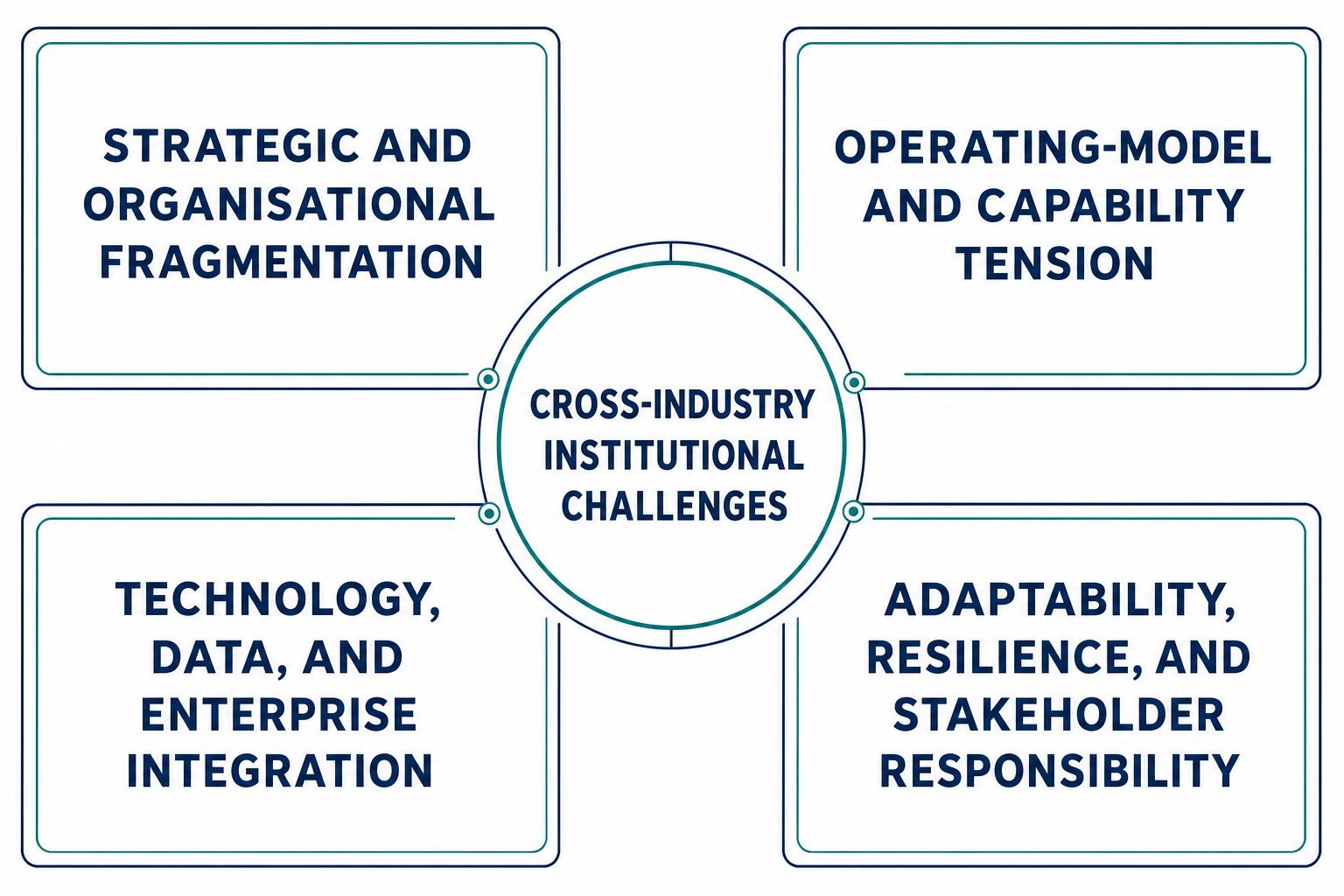
Strategic and Organisational Fragmentation
Enterprise priorities, organisational responsibilities, investment choices, and transformation initiatives may become disconnected when they are governed through separate functional or programme boundaries.
Enterprises across sectors are navigating interconnected changes in strategy, governance, technology, operations, organisational capability, stakeholder expectations, and the conditions required for responsible long-term growth.

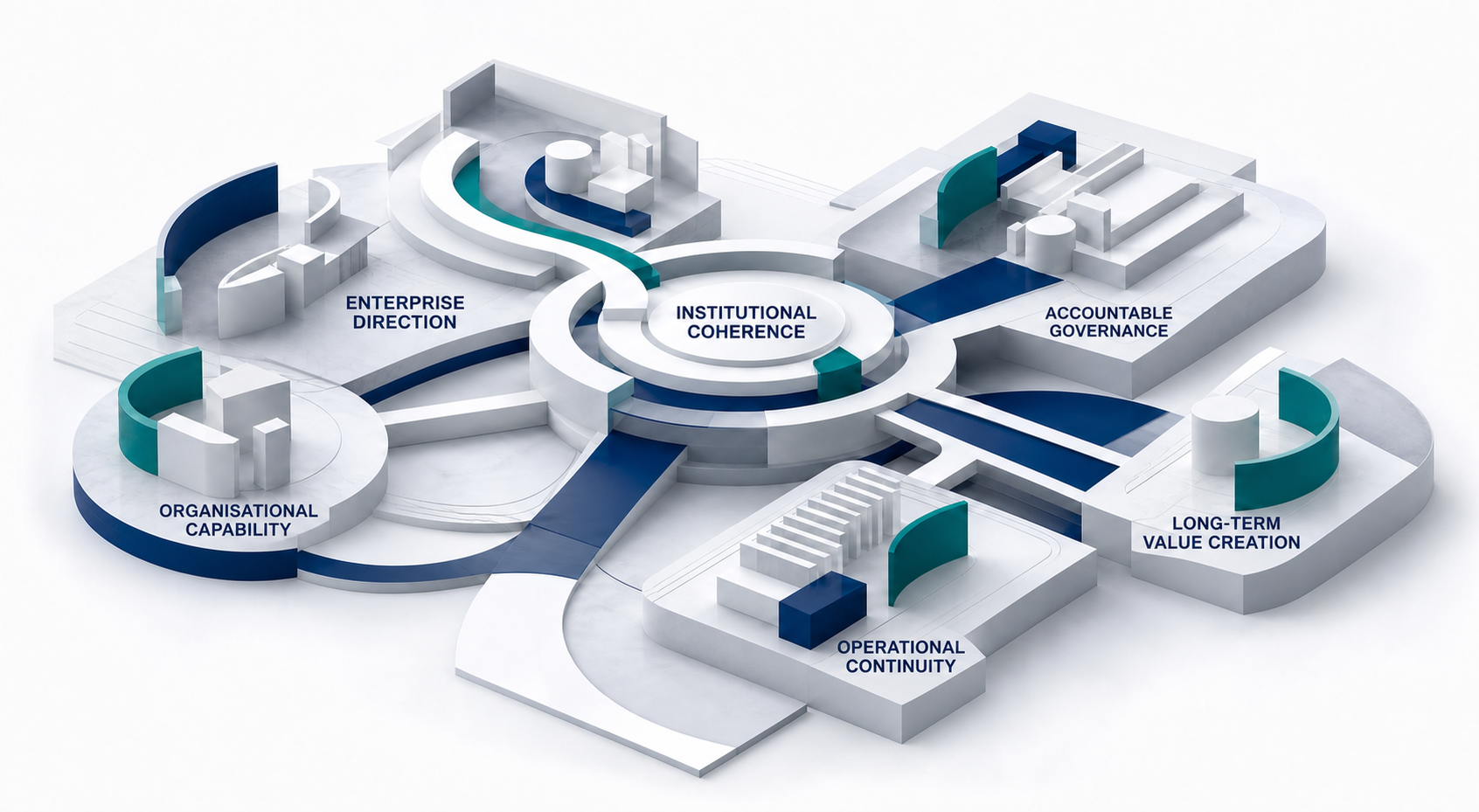
Organisations in different industries may operate through distinct markets, assets, regulations, technologies, and value chains, yet many face a common leadership challenge: enterprise decisions rarely remain confined to one function or initiative.
Changes in strategic direction, operating arrangements, technology, data, workforce capability, partnerships, capital priorities, or stakeholder expectations can create consequences across the wider institution.
The expression of these challenges varies by sector and organisation, but leadership may need to consider how interconnected enterprise dimensions evolve together.
Enterprise priorities, organisational responsibilities, investment choices, and transformation initiatives may become disconnected when they are governed through separate functional or programme boundaries.
Existing structures, processes, roles, assets, technologies, and workforce capabilities may need to evolve while preserving continuity, accountability, and the institution's capacity to operate.
Digital, data, automation, and infrastructure initiatives may create limited institutional value when they are not connected to strategic direction, governance, operating requirements, and organisational readiness.
Changing markets, policies, resources, ecosystems, and stakeholder expectations may require institutions to adapt without weakening operational resilience, responsible decision-making, or long-term continuity.
These challenges are conceptual and non-exhaustive. Their relevance, scale, and expression depend on each organisation's industry, jurisdiction, mandate, operating environment, governance, capabilities, and accountable decisions.
Dayananta views cross-industry transformation as an enterprise undertaking rather than a collection of isolated strategy, organisation, technology, process, asset, or performance initiatives.
Strategic direction, governance, operating arrangements, enterprise capabilities, technology, data, people, resources, partnerships, and stakeholder responsibilities need to be considered as connected parts of the institution.
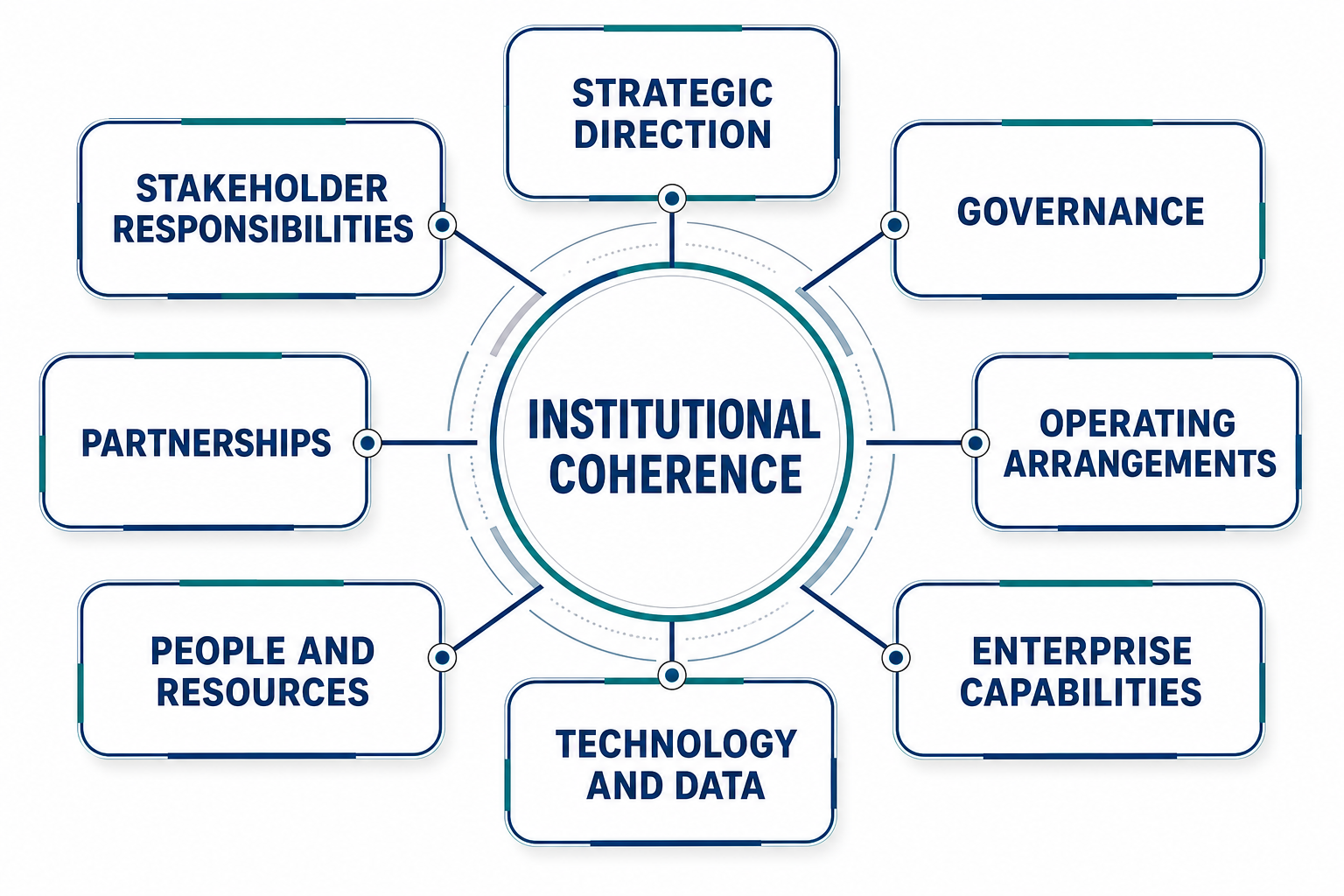
Transformation priorities will vary by organisation and sector, but enterprise leadership may need to consider coordinated attention across the following dimensions.
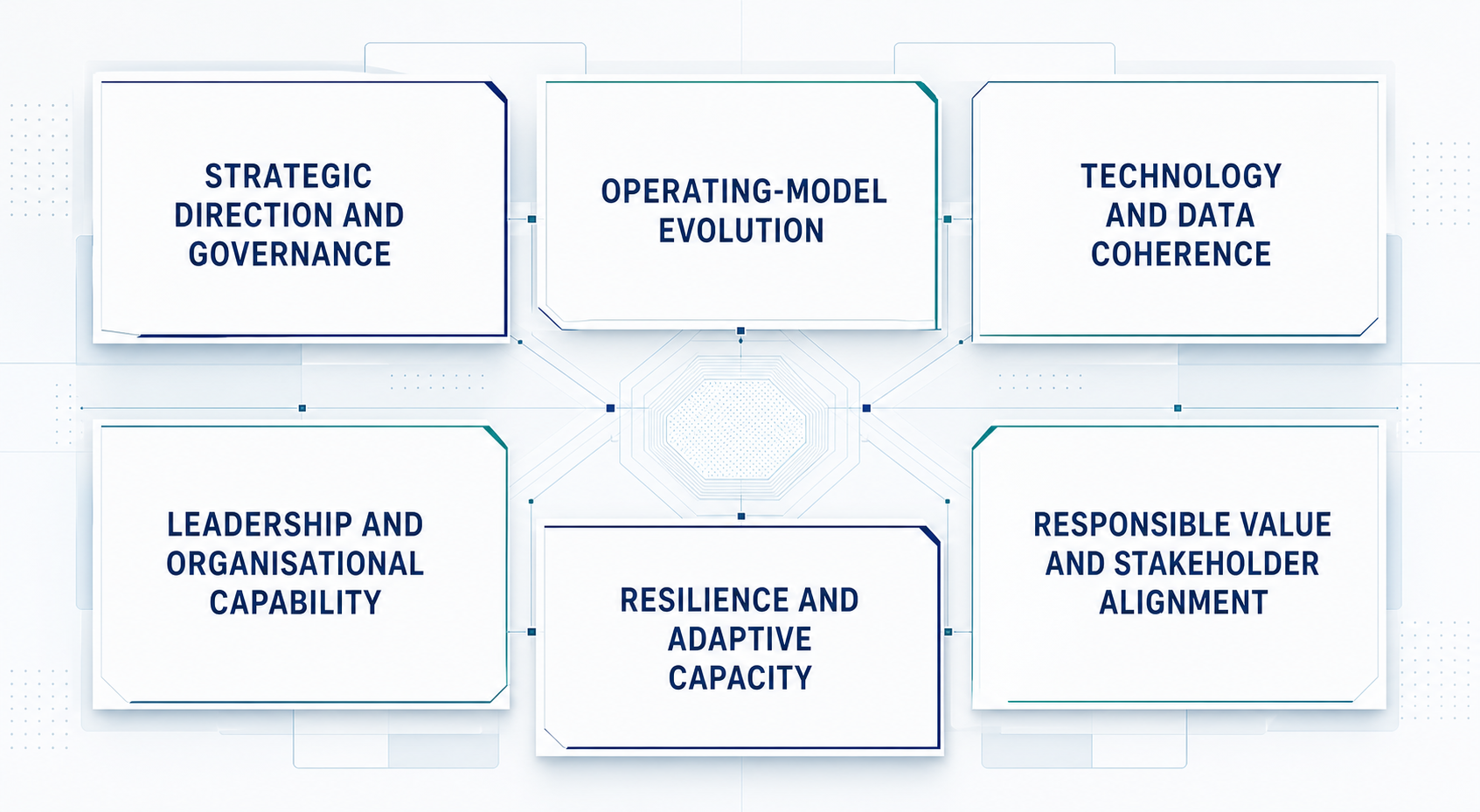
Relate enterprise ambition, decision rights, accountability, oversight, investment choices, and transformation priorities within a coherent institutional frame.
Examine how structures, roles, processes, controls, assets, service arrangements, and organisational boundaries may need to evolve together.
Consider how technology, architecture, information, data governance, automation, and digital capabilities support enterprise priorities without becoming disconnected programmes.
Strengthen the leadership, workforce, knowledge, collaboration, and change capabilities required to govern and sustain institutional evolution.
Connect critical operations, dependencies, continuity considerations, learning, review, and the capacity to respond as conditions change.
Consider how enterprise choices relate to customers, employees, partners, communities, resource responsibilities, and the institution's long-term capacity to create and sustain value.
These priorities are conceptual leadership considerations, not a prescribed sequence, maturity model, operating model, implementation roadmap, sector standard, service package, or exhaustive transformation agenda. Their relevance depends on each organisation's context and accountable decisions.
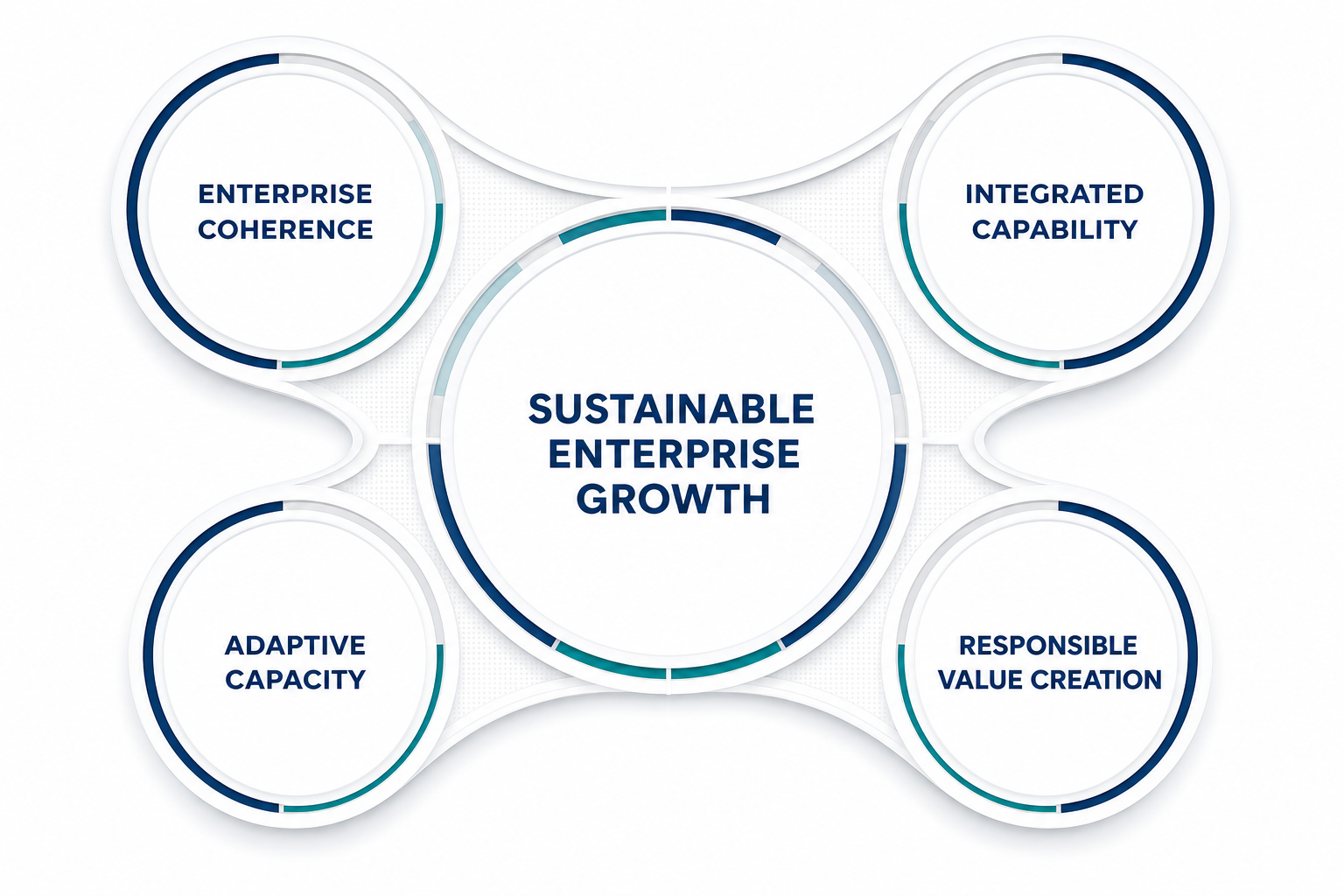
Across industries, sustainable enterprise growth depends on more than expansion, technology adoption, operational improvement, or the launch of individual transformation programmes. It requires leadership to consider how ambition relates to governance, capability, resilience, adaptability, and responsible value creation.
Growth and transformation choices can create implications across operations, assets, capital, technology, data, people, partnerships, customers, stakeholders, and future obligations. An enterprise perspective can help make those relationships more visible before priorities are translated into programmes and commitments.
The objective is not growth at any cost, but a more coherent basis for considering how the institution can evolve while maintaining the capabilities, responsibilities, and adaptive capacity required for long-term continuity.
Relate strategic direction, governance, organisational responsibilities, operating priorities, and resource choices within one enterprise frame.
Consider how leadership, people, processes, technology, data, assets, capital, and partnerships combine to support institutional priorities.
Maintain the evidence, learning, coordination, and review capabilities required to reconsider enterprise choices as conditions evolve.
Consider financial, operational, organisational, stakeholder, and long-term implications without reducing enterprise value to a single measure.
These lenses are conceptual and non-exhaustive. They do not constitute investment criteria, financial projections, performance measures, sector standards, risk ratings, or a guarantee of growth, resilience, adaptability, sustainability, or value creation.
A coherent enterprise perspective may help leadership strengthen the institutional conditions through which transformation choices are connected, governed, and reviewed.
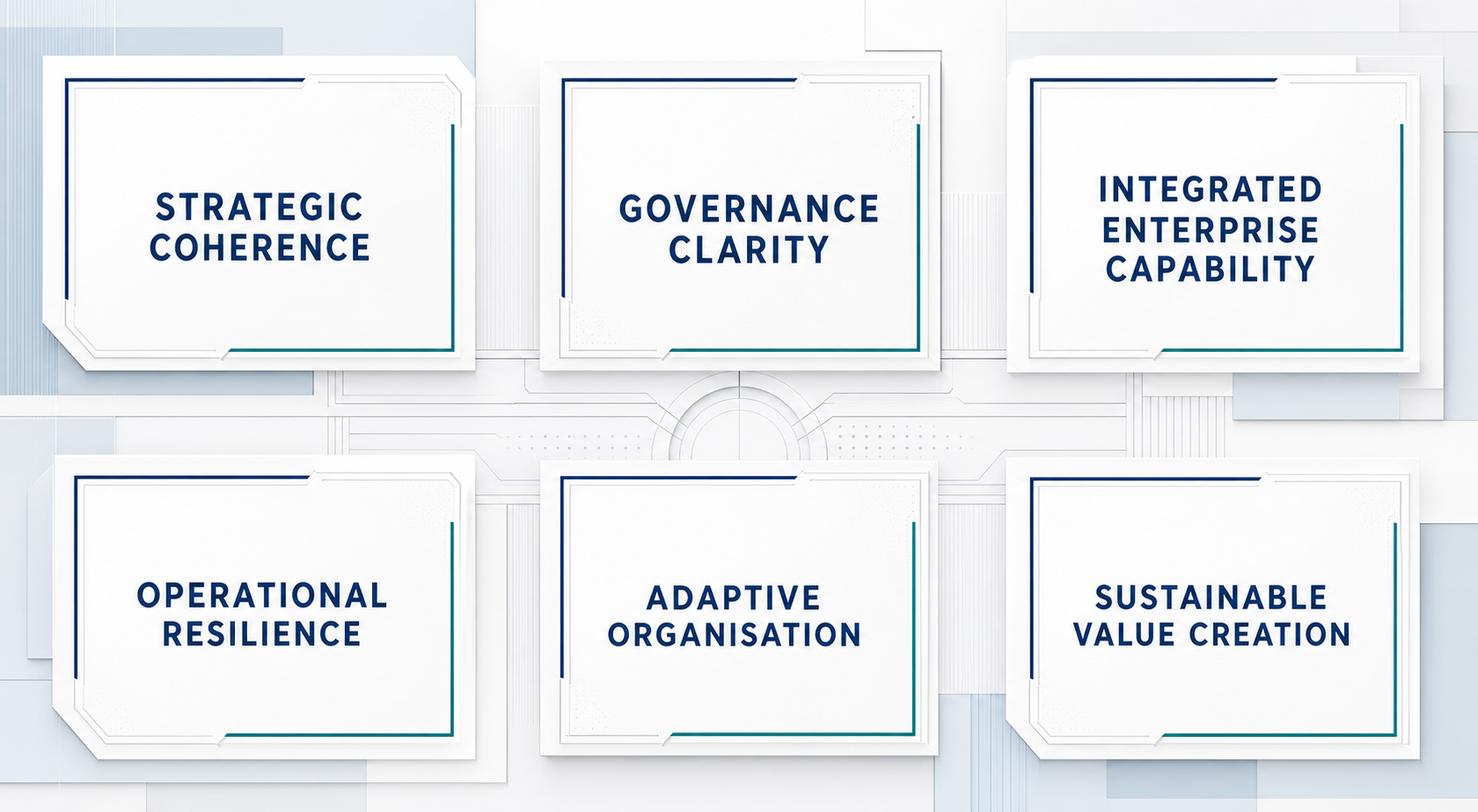
Clearer connection among enterprise direction, transformation priorities, governance responsibilities, capability choices, and operating implications.
Greater visibility of decision rights, accountability, oversight, escalation, and the ownership of enterprise dependencies.
A more connected basis for considering how people, processes, technology, data, assets, resources, and partnerships support institutional priorities.
Stronger leadership visibility across critical operations, dependencies, continuity considerations, constraints, and the consequences of change.
Greater capacity to learn, coordinate, review assumptions, and reconsider enterprise choices as operating conditions evolve.
A broader institutional foundation for considering long-term value in relation to capability, resilience, responsibility, adaptability, and continuity.
These are intended institutional contributions, not measured, attributed, promised, or guaranteed results. Their relevance and realisation depend on each organisation's industry, context, governance, decisions, capabilities, people, processes, technology, data, assets, resources, partners, risks, operating conditions, and execution.
Leadership may use the following questions to examine whether enterprise choices remain connected as sector conditions and institutional priorities evolve.
Which strategic choices require clearer decision rights, accountability, oversight, and alignment across the institution?
Where do organisational structures, processes, technology, data, assets, and workforce capabilities need to evolve together?
Which dependencies, constraints, and emerging conditions require greater leadership visibility, learning, or coordinated response?
How are enterprise priorities being considered in relation to long-term value, stakeholder responsibilities, institutional continuity, and the consequences of change?
These questions are reflective prompts, not an assessment, audit, diagnostic instrument, recommendation, maturity model, or substitute for accountable decision-making and context-specific professional judgement.
Engage with Dayananta to explore how an enterprise perspective may support your organisation's consideration of strategic coherence, governance, integrated capability, adaptability, resilience, and sustainable long-term growth.
Consultation