
Fragmented Transformation Initiatives
Digital initiatives may develop independently across functions without a sufficiently clear relationship to enterprise direction, shared priorities, operating dependencies, and institutional outcomes.
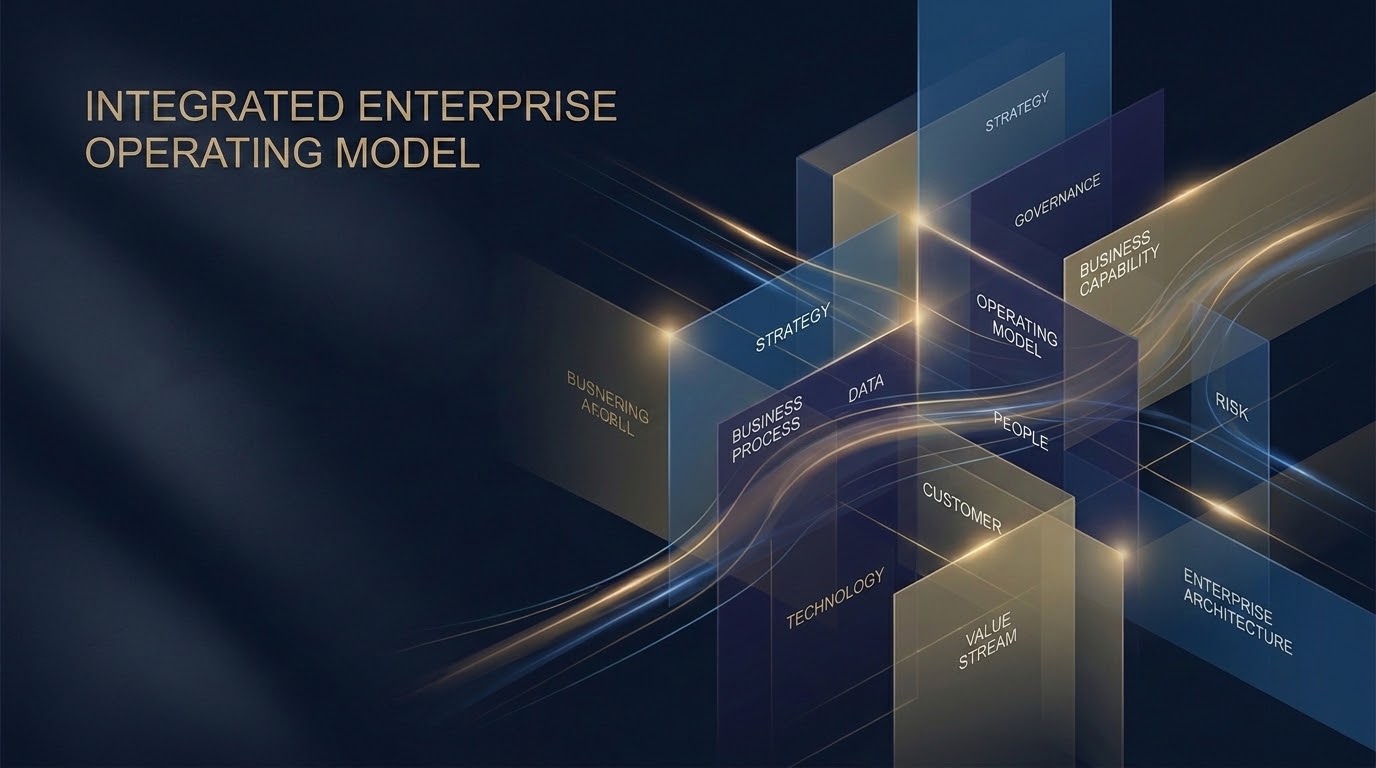
Digital Transformation
Helping institutions connect enterprise direction, operating model, processes, technology, data, governance, and organisational capabilities to advance coherent and responsible transformation.
Digital transformation increasingly shapes how institutions create value, organise work, serve stakeholders, govern information, and respond to changing conditions. Its consequences extend beyond technology choices into enterprise direction, operating responsibilities, capabilities, and decision-making.
Leadership therefore needs a coherent transformation perspective that connects strategic intent with the operating model, processes, data, technology, governance, people, and practical capacity required to evolve.
Transformation complexity increases when strategic priorities, technology initiatives, operating realities, data responsibilities, and organisational change are addressed through separate programmes or short-term delivery frames.
Digital initiatives may develop independently across functions without a sufficiently clear relationship to enterprise direction, shared priorities, operating dependencies, and institutional outcomes.
Technology decisions can move ahead of the roles, processes, decision rights, capabilities, and governance required for new ways of working to become sustainable.
Information ownership, data quality responsibilities, access boundaries, decision evidence, and oversight may remain unclear across the enterprise.
Programmes may prioritise technical delivery while underestimating behavioural change, leadership alignment, capability development, sequencing, and the conditions required for meaningful adoption.
Dayananta approaches digital transformation as an enterprise change capability that connects strategic direction, operating design, process evolution, technology, data, governance, and organisational readiness.
This perspective helps leadership examine which changes matter, how they interact across the institution, what responsibilities must be governed, and which capabilities are needed to translate transformation intent into sustained operating practice.
Technology can enable transformation, but institutional coherence determines whether change can be governed, adopted, and evolved responsibly.
A coherent transformation agenda is supported by connected capabilities that align enterprise priorities, operating change, technology and data choices, governance, and adoption.
Clarify transformation priorities, decision criteria, dependencies, sequencing, and portfolio boundaries in relation to enterprise direction and institutional capacity.
Examine how roles, decision rights, workflows, service relationships, and process responsibilities need to evolve alongside technology-enabled change.
Frame technology choices and architecture direction through enterprise needs, integration dependencies, governance responsibilities, adaptability, and practical constraints.
Strengthen the ownership, quality, access, evidence, and oversight disciplines required for responsible enterprise use of data and information.
Align leadership, responsibilities, skills, behaviours, learning, communication, and change support with the intended transformation direction.
The engagement journey provides a conceptual executive progression from understanding enterprise context and transformation needs to establishing direction, aligning institutional systems, advancing change, and strengthening continuous learning.
Examine enterprise direction, operating context, existing initiatives, technology and data landscape, governance arrangements, capabilities, stakeholder needs, and material constraints.
Identify the transformation priorities that warrant leadership attention through their enterprise contribution, dependencies, urgency, feasibility, and institutional implications.
Define a coherent transformation direction that connects operating model, processes, technology, data, governance, capabilities, decision principles, and sequencing.
Align leadership accountability, ownership, resources, delivery disciplines, change support, and adoption conditions around the approved direction.
Review evidence, strengthen institutional learning, adapt priorities, and renew capabilities as operating conditions, technologies, and enterprise needs change.
When enterprise direction, operating change, technology, data, governance, capabilities, and adoption are considered together, institutions may be better positioned to pursue the following intended outcomes.
A more coherent basis for deciding which transformation initiatives deserve attention, how they contribute to enterprise direction, and what dependencies must be considered.
Greater visibility into how operating model, processes, technology, data, governance, people, and capabilities interact across the transformation agenda.
Clearer decision rights, accountability, evidence requirements, portfolio boundaries, review disciplines, and escalation responsibilities for material transformation choices.
A clearer path for connecting approved change with organisational readiness, operating practice, institutional learning, and responsible adaptation over time.
These are intended institutional contributions, not guaranteed digital, technology, data, cybersecurity, commercial, financial, operational, adoption, efficiency, or performance outcomes. Actual results depend on each institution’s context, decisions, governance, capabilities, technology and data environment, stakeholders, operating conditions, and execution.
Executive transformation discussions often centre on the choices and institutional conditions required to move from digital ambition to coherent enterprise change.
Which transformation priorities are most relevant to enterprise direction, stakeholder needs, operating challenges, and the institution’s capacity to create responsible long-term value?
What decision principles, ownership, integration boundaries, data responsibilities, and governance disciplines are required to keep technology-enabled change coherent?
How can leadership connect delivery with operating readiness, capability development, behavioural change, evidence review, and adaptation as enterprise needs evolve?
Engage with Dayananta to explore how Enterprise Growth Architecture can advance your organisation's strategic objectives.